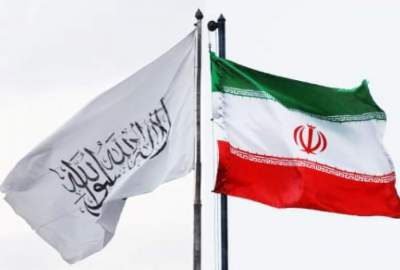
The New Republic magazine, in a report examining the US impasse in the Iran War, writes that Donald Trump not only does not have a clear plan to end the war, but his administration's military and economic policies have also failed to force Iran to back down. This means Trump's defeat against Iran and may end in favor of the Democrats in the upcoming elections.
Publish dateThursday 3 September 2026 - 22:20
Story Code : 364587

Afghan Voice Agency (AVA) - International Service: According to the New Republic, the Iran War went against Washington's expectations from the very first weeks, and now, as months have passed, the US still has no clear way to end it. Counterattacks continue and Washington has not achieved its initial goal, which is to defeat Iran.
The report says that Trump's so-called "maximum economic pressure" policy against Iran has also failed to achieve the expected result of the White House. The US has not been able to bring China and Russia along with its new policy, and Iran still has important economic and financial routes. Thus, the strategy that was supposed to pressure Tehran after the failure of the military operation has faced serious limitations.
Another sign of the crisis is the decline in US arms stocks. According to the report, the shortage of ammunition has become so serious that a number of senior military commanders have warned US Secretary of Defense Pete Hegsett about continuing the war. Their concern is that continuing operations against Iran will reduce the US ability to deal with threats in other regions of the world and put more pressure on the country's military than before.
Trump continues to insist that the US has won the war and describes Iran as a defeated country. But the New Republic points out the contradiction between this claim and the reality of the war: Iran is still standing, counterattacks are continuing, and the Strait of Hormuz is still facing a crisis, unlike before the war. The report sees this situation as a sign of the gap between Trump's narrative of the war and the reality on the ground.
According to the New Republic, the result of the war so far has not been to increase US security, but rather to erode its military capabilities. By consuming large amounts of ammunition and transferring resources from other regions, the US has made itself more vulnerable to potential crises in other parts of the world. At the same time, Iran has not given in to Washington’s main goal, which is defeat or surrender.
The report believes that one of the reasons the war has not yet reached a more dangerous stage is Trump’s concern about the entry of US ground forces. However, the author argues that relying solely on air strikes and economic sanctions has not yet been able to create a way to end the war. As a result, the US is stuck in a situation where it cannot easily win, nor does it have a clear path out of the conflict.
The New Republic believes that a war against Iran could become one of the important issues in the upcoming US elections. If the war continues, it will become a direct election issue, and if it ends, its economic consequences, especially inflation and the crisis caused by the disruption in the Strait of Hormuz, could remain in the American political atmosphere. However, the report says that Democrats have so far used it as a tool for political attacks on Trump and Republicans rather than offering a plan to end the war.
In the New Republic’s view, a return to a diplomatic agreement could be a way to end the war, reduce nuclear tensions, reopen the Strait of Hormuz and give the US military a chance to replenish its weapons stockpiles. Overall, the report paints a picture of a war that the US decided to start but now has no clear plan for ending. Trump continues to talk about victory, but counterattacks continue, US military reserves have dwindled, and economic pressure has failed to isolate Iran. In such circumstances, the New Republic believes that Washington’s biggest question is no longer just how to continue the war; Rather, it is about finding a way out of a war that, the longer it continues, the greater its political, economic, and military costs.
avapress.net/vdcc40q1m2bqep8.-ya2.html
Top hits