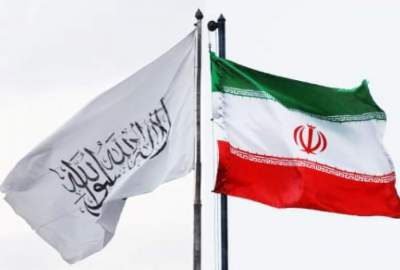
The resignation of Dan Driscoll, the US Army Secretary, following months of tension with Pete Hegsett, the Secretary of Defense, is the latest link in a chain that has challenged the Pentagon at one of its most sensitive times. The resignation, which occurred in the midst of a military conflict with Iran and at the same time as reports of attacks on civilians in Sirik, has raised serious questions about the coherence of the command, institutional transparency, and Washington’s accountability.
Publish dateSaturday 5 September 2026 - 09:08
Story Code : 364635
Pentagon Resignation; Collapse of Command or Escaping Responsibility for War Crimes?
Seyed Hassan Hosseini

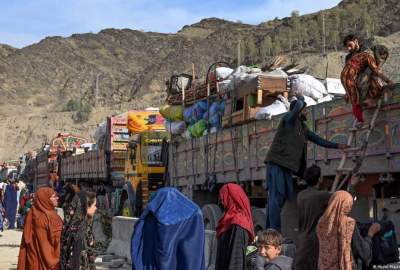
For an Afghan audience that has experienced two decades of US military presence with all its consequences, these developments are familiar; Americans who get caught up in military crises usually either sacrifice their commanders or cover up their weakness with crimes on the field. The question is, which side of this equation is Driscoll’s resignation?
Chain of dismissals; managerial collapse or political purge?
Dan Driscoll, who was the youngest Secretary of the Army until his resignation, was forced to resign after months of public conflict with Pete Hegsett. But he is not alone; before him, General Randy George (Chief of Staff of the Army) and General Christopher Donahue (Commander of US Forces in Europe and Africa) were dismissed. Reliable sources report that at least 45 senior officers have been removed from the list of promotions this year.
What distinguishes these changes from a typical reorganization is the lack of transparency in the reasons for the dismissals. At a time when the US military is engaged in an active war with Iran, sweeping changes at the command level, without providing a clear explanation, are not only signs of a management crisis, but also a sign of the prioritization of political loyalty over professional competence in the Pentagon.
The gap in the circle of power; a rift that extends from the White House to Congress
Driscoll's closeness to Vice President J.D. Vance highlights the political dimensions of this resignation. His clash with Hegsett, particularly over the cancellation of the drone project and the reported exclusion of female and minority officers from the promotion list, highlights a deep rift at the highest levels of the executive branch.
The reaction from Republican senators, including Mike Rands and Don Bacon, who have openly criticized the lack of justification for the dismissals, suggests that the dispute is not simply an internal government conflict but has become a military-political issue that has even the Republican base in doubt. When a defense secretary dismisses senior commanders without a clear reason, it not only weakens the military but also challenges the legitimacy of military institutions.
War with Iran and the Costs of a Command Crisis
Driscoll’s resignation comes as the United States has been engaged in a six-month war with Iran, with reports of a sharp decline in missile stockpiles and limited fleet readiness. The objections of senior commanders to the deployment of forces and their warnings about the erosion of the ability to confront other threats indicate an operational pressure that has brought the Pentagon to the brink of partial collapse.
In such circumstances, changing commanders and creating an atmosphere of uncertainty at the highest levels of decision-making will only weaken the morale of the troops and reduce combat readiness. Contrary to the claims of Washington officials, the war with Iran is not a show of force, but a test to measure the tolerance of the US military structure in the face of simultaneous crises; a test in which the Pentagon has so far failed.
Sirik; a crime that was lost in the Pentagon's silence
Along with the management chaos, the confirmed reports of the attack on a wedding ceremony in Sirik and the martyrdom of two children and dozens of injuries show another face of the US military: an army that, unable to achieve military objectives, targets civilians. This action is not an "operational error" but a recurring pattern of US military behavior; A pattern that has been seen many times in Afghanistan, Iraq, and Yemen.
The Pentagon and the White House have remained silent about the attack and have also provided vague and opaque responses to Driscoll’s resignation. But silence in the face of a crime is a greater indictment than the crime itself. Washington, which claims to be the world’s leader in human rights, loses its moral legitimacy once and for all when questions about the killing of children are met with silence.
Institutional Silence: A Strategy of Concealment or Collapse of Accountability?
The Pentagon has not held an official press conference since May 5, nearly four months ago. This silence comes while the United States is engaged in an active war and Pentagon spokesman Sean Parnell had previously promised “the most transparent Department of Defense in history.”
Institutional silence in wartime, especially when accompanied by reports of civilian casualties and the resignation of senior officials, is more a sign of confusion, inability to manage the narrative, and an attempt to evade responsibility than a sign of strength. Instead of responding, Washington prefers to remain silent and let events remain in a haze of ambiguity; but this strategy, in the long run, only further erodes public trust.
Conclusion; A message for Afghanistan and the region
For the Afghan audience, these events are familiar: Americans, mired in a crisis of command, instead of reforming the structure, cover up their weakness with crimes in the field and silence in the face of accountability. From Kabul to Sirik, from bombing weddings to dismissing commanders, the consistent pattern of America has been failure in management and immorality in dealing with civilians.
avapress.net/vdcgwt9wnak9334.5jra.html
Top hits