September 11, 2001, was not merely a turning point in international politics; for Afghanistan, it marked the beginning of a new chapter of war, violence, human casualties, and displacement. While New York was plunged into shock that day, few could have foreseen that the military response to the 9/11 attacks would ultimately bring decades of war, hundreds of thousands of casualties, and one of the largest waves of displacement in modern times to the people of a country that had played no role in planning or executing those attacks.
Publish dateSaturday 12 September 2026 - 08:49
Story Code : 365138

The tragedy of Afghanistan is not limited to the onset of a new war; the deeper issue lies in the fact that the people who found themselves at the center of the "War on Terror" starting October 7, 2001, had neither played a role in planning the 9/11 attacks nor possessed much agency in deciding their own fate. They became a people upon whose lives the battleground of great powers and armed groups was imposed, and a vast number of them stood in the front ranks of the victims.
From New York to Kabul: A Nation’s Fate Takes a Turn
Following the 9/11 attacks, the United States held Al-Qaeda and the Taliban responsible for the event and launched its military operations in Afghanistan on October 7, 2001.
These operations were launched with the stated goals of combating terrorism, dismantling the Al-Qaeda network, and overthrowing the rule of the Islamic Emirate; yet for the people of Afghanistan, the arrival of foreign forces signaled the beginning of a new era of insecurity and conflict. Afghanistan, having not yet recovered from the aftermath of the Soviet war and years of civil conflict, once again became an arena for the rivalry and confrontation of powers that made key decisions regarding war and peace from outside the country's borders.
What distinguished this war from many previous conflicts was the intertwining of a war-torn nation's fate with a transnational event; it was as if Afghanistan were compelled to pay the price for an incident that had not even occurred within its own territory.
The Human Cost of the War on Terror
The burden of this war fell, first and foremost, upon the ordinary people of Afghanistan. According to estimates by Brown University’s "Costs of War" project, the total death toll from post-9/11 conflicts in Afghanistan has surpassed 170,000 a figure that illustrates the immense human cost of the war.
Annual reports by the United Nations Assistance Mission in Afghanistan (UNAMA) have also repeatedly documented civilian casualties resulting from suicide attacks, ground combat, and military operations.
Amidst this, one fact has often been overlooked: the people who paid the highest price for the war were the very ones who played no role in its inception.
If 9/11 marked the beginning of a global war on terror, Afghanistan became one of the primary theaters for that conflict; yet, the victims on this battlefield were predominantly citizens who had played no part in planning the attacks on New York and Washington, nor in the global powers' decision to launch the war.
A Generation of Refugees: The Human Legacy of 9/11
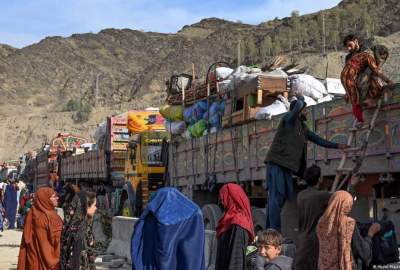
Perhaps one of the most enduring consequences of the war is the displacement of millions of Afghan citizens—people who, over the course of two decades, were repeatedly forced to leave their homes, their communities, and even their country. This trend entered a new phase following the withdrawal of international forces in August 2021 and the return of the Islamic Emirate to power, as large numbers of Afghans once again embarked on the path of migration and sought asylum.
Afghanistan remains one of the world's largest sources of refugees. Yet, behind these statistics lies the fate of a generation that has spent a significant portion of its life outside its homeland.
For some within this generation, pre-war Afghanistan is no longer a tangible memory; it is a vague image of a land known only through their parents' accounts, photographs, and scattered recollections. At the same time, they face legal, economic, social, and identity-related challenges in many of their host countries.
They stand between two worlds: one they do not fully know, and another that has not always embraced them as full members of society.
In this light, one of the most bitter legacies of the post-9/11 era is the emergence of a generation that has lost part of its natural bond with the homeland amidst war and displacement.
Consequences Beyond Afghanistan’s Borders
The post-9/11 war was not confined to Afghanistan’s borders. Massive waves of migration and displacement influenced regional security and political dynamics, and Afghanistan’s neighbors from Iran and Pakistan to Central Asian nations faced the direct consequences.
The influx of millions of migrants not only created economic and social challenges but also became a pivotal issue in the migration and security policies of countries across the region. Yet, after more than two decades, critical questions remain: If the primary goal of the war was to eradicate terrorism and establish security, why does the region after years of conflict still grapple with extremism, instability, and security crises? And more importantly, what measure of accountability, justice, and reparation have the victims who lost their lives in pursuit of these goals received?
Revisiting a Human Tragedy
For Afghanistan, September 11 is not merely a date on the global calendar; it is a turning point that altered the destinies of millions of people for years to come.
Revisiting this event from the perspective of the people of Afghanistan and the region means looking beyond the grand narratives of governments and powers to focus on the stories of the individuals who lived through these upheavals those who perished in bombardments, lost their families, abandoned their homes, or in the course of migration lost a part of their identity and their connection to their homeland.
Perhaps the most crucial question today is this: amidst all the narratives constructed around 9/11, how much attention has been paid to the stories of families in Afghanistan, Pakistan, Iran, and elsewhere in the region who endured the consequences of the war launched in response to that attack?
Ultimately, 9/11 is a story of profound asymmetry; while the world was plunged into shock over the events in New York that day, the ensuing years saw thousands indeed, hundreds of thousands of families in Afghanistan also plunged into mourning.
History tallies its victims, but the mere counting of casualties does not fulfill the historical responsibility involved. What remains, even after twenty-five years, is the need to re-examine the war from the perspective of those who did not choose it, yet paid the price for it.
avapress.net/vdcfmtdmcw6dvya.r7iw.html
Top hits